Tuesday, 16 August 2016

The Gardener's Apprentice. A novel


The Gardener's Apprentice


After many a year of writing, rewriting, abandonment in a sea of despair and doubt... Finally I have managed to finish a novel. And now it's available as a Kindle download through Amazon Bookstore! A real labour of love! Well, it's out there in the wide world now. Look up 'The Gardener's Apprentice' or search for Robert Ketchell on Amazon.


The novel concerns a young boy Shigoto Okugi who becomes an apprentice to a master gardener. It is set in Japan of the late 16th century, and the action takes place on an island that is the feudal home to the Saeko clan. Shigoto’s teacher is a Zen monk (Maguro Sensei) who wishes to transmit to his apprentice the cultural and spiritual values inherent in the garden tradition in Japan.

Shigoto’s mother, Oyadori, is a maidservant to the wife of the head of the Saeko clan. She becomes pregnant by a brother of the Emperor who is exiled to island. Oyadori had been chosen to be the wife of Kanyu Shigoto a minor official of Lord Saeko. Discovering the pregnancy the prospective husband’s family plan to cancel any further involvement, until Kanyu persuades his father that their family may benefit by proceeding with the marriage plans and accepting the child as his own.

As Shigoto’s interest in gardening develops through the tutelage of his teacher, he realises that it offers much more than a simple path of employment. What is being offered to him is a creative and spiritual vocation. His teacher is an enigmatic character with apparently supernatural powers and is capable of profound insights. Shigoto overhears his father plotting a coup with a son of Lord Saeko, a suspicion that he keeps to himself.


The story reaches a climax with a coup attempt during which Shigoto is severely injured trying to protect his mother and grandmother at their home. His teacher nurses him back to health, but Shigoto’s name has been irrevocably tainted by the traitorous actions of Kanyu, and Maguro Sensei arranges for Shigoto to secretly leave the life he has known and his island home behind.

Please give it a try, if you enjoyed it, or even if not, then write a review, tell all your friends, and then hang on for the sequel which I am writing now. The sequel picks up the story from where 'The Gardener's Apprentice' ends, and takes the hero on his journey to Kyoto at the beginning of the Edo period. Hopefully that will be out next year. Enjoy!


Wednesday, 3 August 2016

The Cry of the Earth


A bird came and spoke to me
With words beyond hearing
Yet I sensed its mythic story,
As all beings are connected
However thin threads may wear.


As shadows lengthen
So where lies hope
Prayers for the children,
Not in this world just now
Perhaps in the wind
Blowing through trees
Across the skin of the ocean,
Are we any closer to awakening
Or still living in sour dreamtime?


I wish I had answers
To burnt out deformed desire,
To untangle this nest of hatred
With a soothing sweep of the hand,


Beneath the sky
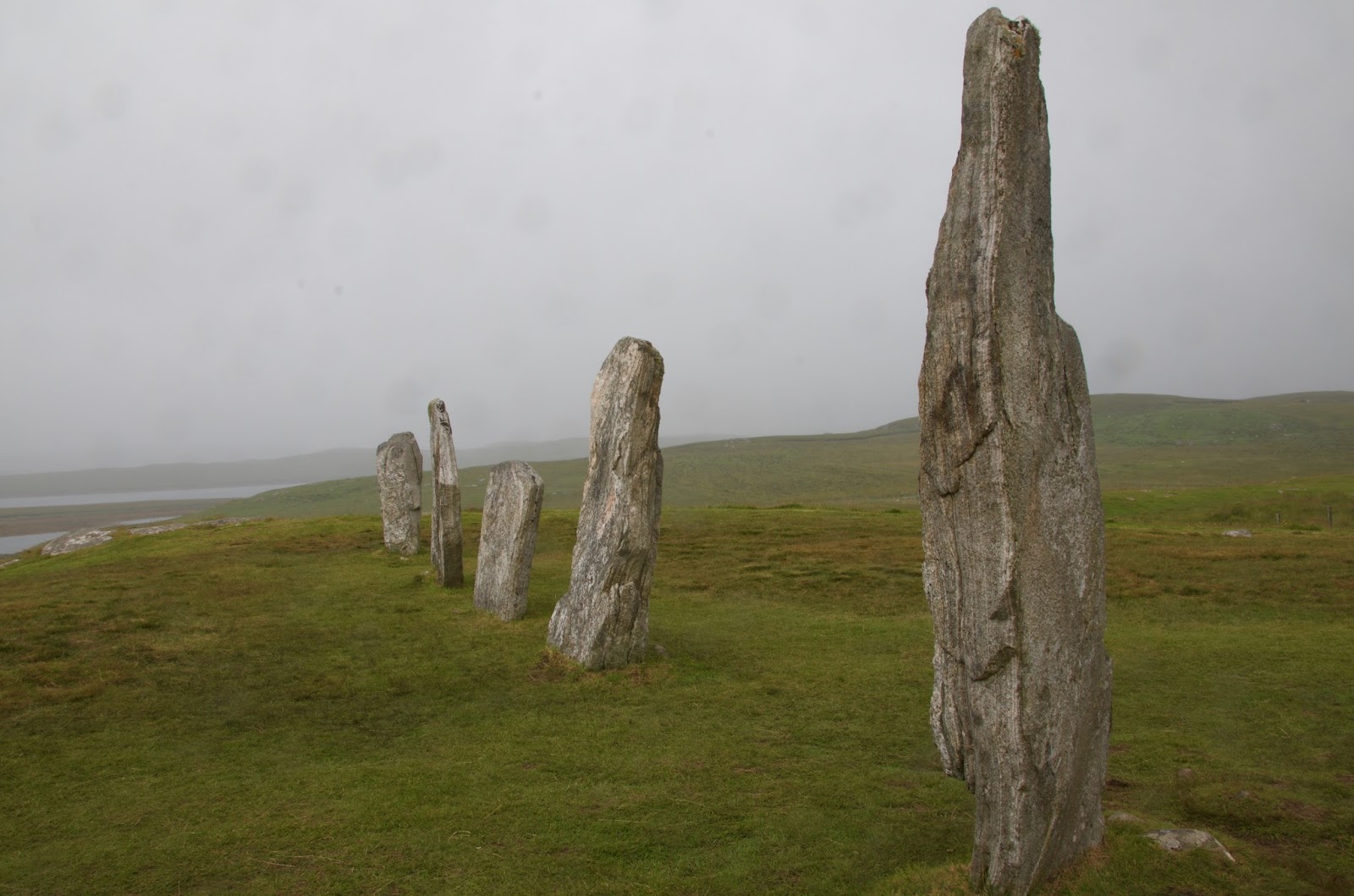
A tumble of stone smeared across the hills glowing silver
Between the folds
A gathering of the westward driven rain pooled mysterious deep
Beneath the surface

A layering of history over geology the mysteries of human purpose.


Beyond the crest an eagle soars
In the peat stained water trout dart,
Stone sentinels guard the past
Waiting to hear the cry of the earth.

Friday, 1 July 2016

Recent works

Central arrangement of dry garden, Warwickshire, England
 More and more as I work to create gardens do I realise what a privilege it is to have the opportunity to devote oneself to manifesting Beauty. Having trained in traditional gardens in Japan in the early 1980's it was my goal to find a way of integrating what I learned into other cultures. Instinct told me the fundamental principles were universal truths. There could with the right application be found ways of integrating these ideas in places outside of Japan. Not necessarily to copy what was done in Japan, but to embody those principles and blend them with the local culture.

Dry garden, Warwickshire, England
 In this garden, still not quite finished! The planting is 'non-Japanese', that is the plant palette I chose are not plants normally used in the gardens I visit in Japan. But then the outlook is not Japan either. The garden overlooks the greater part of the garden area which is full of shrubs and herbaceous planting familiar in England. Beyond the confines of the garden is a grass paddock with horses grazing, and beyond the paddock hedgerow trees of oak, sycamore, hazel and hawthorn, beyond that the infinity of the sky. I saw the location as a series of layers which could be viewed as a whole from inside the home. In Japan they will often use a narrowly defined range of plants. Here in this garden Thyme 'Doone Valley' and Sagina subulata ('Irish Moss') was used to create sweeps of low ground cover textural planting. To segregate the dry landscape garden from its more English cousin, a low hedge of Escallonia 'Donard's Seedling' has been planted. The garden is very young and will take a season or two for the ground cover to grow into a continuous carpet.


Garden in an orchard, Kent, England
To create gardens that  have a quality of peaceful harmony there needs to be a fusion of the garden creator with the space and the materials. The garden creator is really an orchestrator or a conductor bringing different materials together in space. In this particular garden there are a number of very old cherry trees. They once formed an orchard, but have long been undisturbed except by the birds that enjoy the fruit.

Stream between ancient cherry trees. Kent, England
 A stream now winds its way among the trees, three ponds allow the water to gather before moving on. A variety of treatments to the streams creates a range of sounds that a visitor will discover as they walk through the garden. There are no defined paths so everyone can find their own way through the space.


Moon gate opening to pavilion. Kent, England
 Having walked down through the garden, perhaps for some of the way having followed the stream, the visitor has to walk around the pavilion to find a way to enter. Rising up a series of steps built out of very large slabs of stone, the 'Moon gate' opening frames a view back up the garden. A pavilion is a destination, but also a place to rest. A place to gather one's thoughts and experiences, to allow them to become embodied. The architecture defines a view, focuses a way of seeing again something that has already been experienced, and in this way revealing the garden in a new way. Hide and reveal, opening and closing, ever being drawn on to discover anew.


Leaf shaped roof of pavilion. Kent, England

Water garden. Gloucestershire, England
This garden actually contains four ponds and two streams. the landscape element of the work took nearly a year to complete. It transformed of what was a large grass slope into a stroll garden. Yet to be completed are two buildings, one will be a tea house that will sit out over the largest of the ponds, and the other will be a covered seat in a contemporary style. The covered seat will also act as a focal point in the far distance for the view across the garden from the tea house.

Water garden..Gloustershire, England
In this garden the planting chosen has been carefully considered to develop as a series of flowing shapes that drift across the site. The plantings are mainly Buxus (English Box) and Prunus laureoceracus (small leaved laurel), both can be pruned and clipped into low mounds. Over 100 tons of boulders (the largest of which weighed over 6 tons) were carefully selected and placed in the composition.  There is an interesting contrast in feeling between the soft fluid shapes of the plantings and the rounded forms of the boulders. The impact of the stones is immediate, the planting will take a few years to fill out and will require tender care to guide them and then maintain them into the forms that the garden asks for.
Arrangement of large boulders. Gloucestershire, England
So often it becomes apparent how close the creation of a garden and the creation of music is. In both arts the composer is working with patterns of energy. Rocks have their individual energy, as do plants, as do notes. Everything vibrates to its own song. The task of the garden creator and the composer is the same, to draw the different patterns into a harmonious whole. What is also important for the garden creator is to embody the qualities he or she desires to project through the garden. It is this energy flow that the viewer of the garden interacts with, absorbs through experience of what is felt. Beyond music the garden invokes the qualities of time, change and the seasons, even from day to day change happens, from one moment to the next.


Tuesday, 31 May 2016

Castle Rigg Stone Circle


Immemorial wisdom of the stones
Soft as a lover’s skin
Brilliant lemon-yellow lichen constellations
Scattered over your flanks.
Here at the centre the landscape womb
This point of transformation
Gateway between liminal and subliminal,
The awakened dream reforms eye bright.